


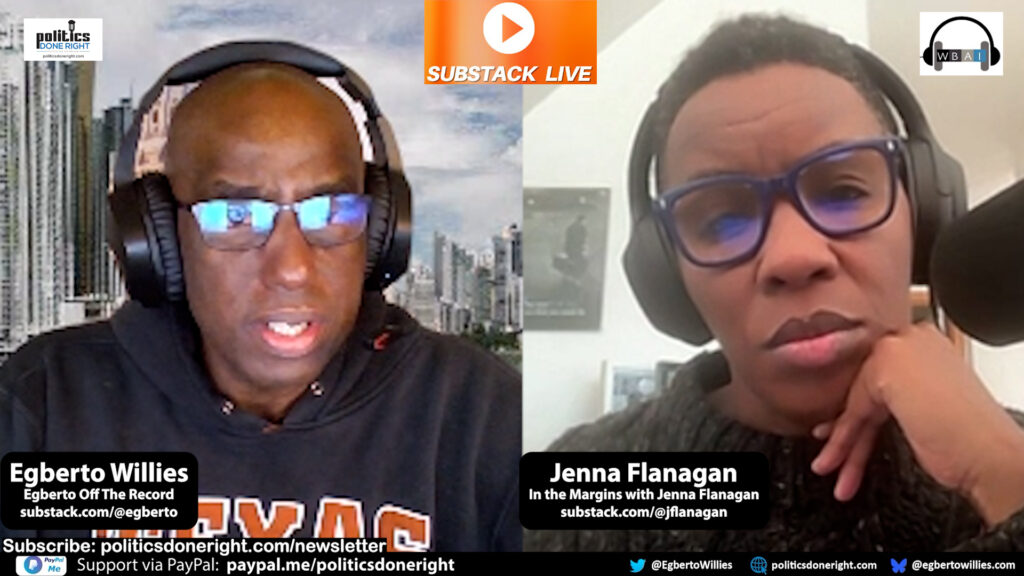
WBAI’s We Decide with Jenna Flanagan Panel: Iran talks collapse after U.S. ship seizure, Israel escalates in Lebanon, and U.S. gun violence exposes a system prioritizing force over life.
Iran Talks Fail


Podcasts (Video — Audio)
The embedded video contains solely the questions that WBAI’s We Decide’s Jenna Flanagan asked me. The entire panel discussion can be viewed here (Episode: 2026-04-13). We Decide is a joint Pacifica Affiliate, WBAI production, and the We Decide: America at the Crossroads with Jenna Flanagan.
Summary
A world on edge demands clarity, not spin. The panel cuts through contradictions and exposes how reckless policy choices are driving both global instability and domestic violence.
- U.S.–Iran negotiations falter after the naval seizure escalates tensions, exposing incoherent leadership and conflicting signals from Washington.
- The discussion reframes the issue: the core question is not negotiation tactics but the legitimacy of U.S. intervention and its long-term blowback.
- Israel’s actions in Lebanon are characterized as part of a broader territorial expansion strategy, using regional conflict as cover for aggressive policy.
- The risk of a wider regional war threatens global economic collapse, particularly if energy infrastructure in the Gulf becomes a target.
- Domestic gun violence reflects the same systemic disregard for life embedded in U.S. foreign policy, creating a cycle of normalized violence.
The analysis makes one thing clear: militarism abroad and violence at home are not separate crises—they are symptoms of the same political failure. A progressive framework demands accountability, diplomacy, and a re-centering of human life over power.
Premium Content (Complimentary
The panel discussion lays bare a dangerous truth: the United States continues to operate from a posture of dominance rather than diplomacy, and the consequences are now converging globally and domestically. The unraveling of the Iran negotiations does not exist in a vacuum. It reflects a deeper systemic failure in the exercise of power, particularly under the leadership of Donald Trump, whose approach prioritizes spectacle over substance.
The seizure of an Iranian cargo ship represents more than a tactical move—it signals escalation. When military action precedes diplomacy, it undermines the very premise of negotiation. According to reporting cited during the panel, Iran has already stepped back from talks following the incident. This aligns with broader analysis from organizations such as the International Crisis Group, which has repeatedly warned that coercive tactics reduce the likelihood of sustainable agreements and increase the likelihood of conflict.
The conversation rightly pivots to a more fundamental question: what gives the United States the authority to act in such a manner? This critique challenges the normalization of interventionist policy. It echoes findings from the Costs of War Project, which documents the devastating human and economic toll of U.S. military interventions—trillions of dollars spent and hundreds of thousands of lives lost. When viewed through this lens, the current tensions with Iran are not anomalies; they are continuations of a longstanding pattern.
At the same time, Israel’s actions in Lebanon reveal another layer of geopolitical reality. The panel characterizes these moves as part of a territorial strategy, a perspective supported by reporting from outlets like Human Rights Watch, which has documented patterns of displacement and disproportionate force in the region. The framing of security concerns often obscures the material outcomes: destroyed infrastructure, displaced civilians, and a cycle of violence that perpetuates instability.
The most alarming dimension, however, lies in the potential for regional escalation. The panel highlights the vulnerability of global energy infrastructure, particularly in the Gulf. If conflict spreads to major oil-producing nations such as Saudi Arabia or the United Arab Emirates, the economic consequences would be immediate and severe. The International Energy Agency has consistently warned that disruptions in this region can trigger global price shocks, disproportionately affecting working-class populations.
Yet, the discussion does not stop at foreign policy. It draws a direct line to domestic violence, particularly the mass shooting in Shreveport. This connection is not rhetorical—it is structural. A society that normalizes violence abroad often internalizes it at home. The American Public Health Association has identified gun violence as a public health crisis, emphasizing that policy choices—such as lax gun laws—directly contribute to these outcomes.
The panel’s conclusion is stark but necessary: meaningful change will not occur without a fundamental shift in political priorities. Incremental reform cannot address systemic issues rooted in power and profit. The current system rewards militarization and deregulation, both of which undermine human security.
A progressive vision offers an alternative. It demands investment in diplomacy over warfare, in community safety over punitive measures, and in economic justice over corporate gain. Data from the Economic Policy Institute shows that policies centered on working-class needs—such as healthcare access, wage growth, and social investment—produce more stable and equitable societies.
Ultimately, the crises discussed in this panel are interconnected. They stem from a worldview that prioritizes dominance over cooperation and profit over people. Changing that trajectory requires more than policy tweaks; it requires a reimagining of what governance should achieve. The stakes could not be higher.