


Iran conflict, Cuba sanctions, and shutdown fallout show a system built on control, misinformation, and political games.
From Cuba to Airports

Watch Politics Done Right T.V. here.

Podcasts (Video — Audio)
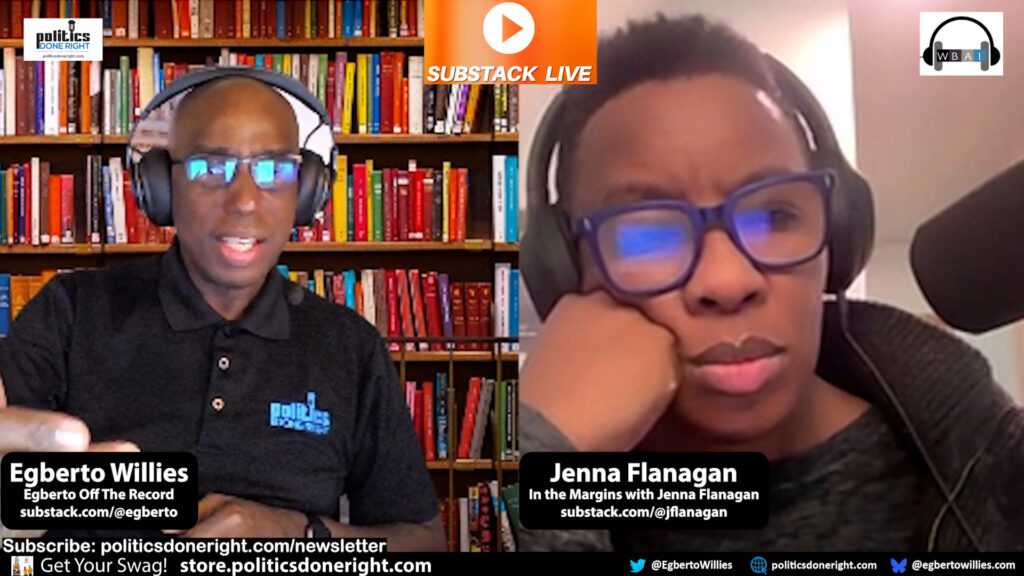
The embedded video contains solely the questions that WBAI’s We Decide’s Jenna Flanagan asked me. The entire panel discussion can be viewed here. We Decide is a joint Pacifica Affiliate, WBAI production, and the We Decide: America at the Crossroads with Jenna Flanagan.
Summary
Power abroad and dysfunction at home are not accidents—they are policy choices.
The panel discussion on the Pacifica Affiliate/WBAI production We Decide with Jenna Flanagan exposes how U.S. foreign policy aggression toward Cuba and Iran mirrors domestic dysfunction, from airport chaos to a prolonged government shutdown. It challenges the dominant narrative by asserting that economic collapse in countries like Cuba is not organic but engineered through sanctions, financial isolation, and geopolitical coercion. At the same time, it highlights how Republicans shape public perception of the shutdown, deflecting responsibility while workers go unpaid and systems falter. The throughline is clear: power structures manufacture crises abroad and misdirect blame at home, leaving ordinary people to bear the cost.
- Cuba’s “failure” is manufactured: Sanctions, financial blockades, and diplomatic pressure undermine its economy, then get used as proof of dysfunction.
- Economic warfare replaces diplomacy: The U.S. pressures countries to cut ties with Cuba, choking its global barter-based economy.
- Iran conflict reveals strategic incoherence: The U.S. lacks a clear objective while aligning with Israel’s escalation strategy.
- Airport chaos reflects policy failure: Underfunding and mismanagement tied to the shutdown ripple into everyday dysfunction.
- Narrative control shapes political outcomes: Republicans dominate messaging, blaming Democrats while blocking worker pay solutions.
The conversation makes an unambiguous case: systemic harm—whether inflicted on Cuba, Iran, or American workers—is not incidental. It is the predictable outcome of policies rooted in dominance, misinformation, and political expediency. A progressive lens reveals that accountability must shift from scapegoats to the architects of these crises.
Premium Content (Complimentary)
The conversation lays bare a recurring pattern in American governance: policymakers construct crises abroad while simultaneously mismanaging realities at home, then deploy narratives that obscure responsibility. This dual dynamic—external aggression paired with internal dysfunction—reveals a political economy that prioritizes power over people.
The critique of Cuba stands as one of the clearest examples. For decades, U.S. policy has imposed sweeping economic sanctions, restricted financial transactions through systems like SWIFT, and pressured allied nations to sever trade relationships. These measures do not simply “influence” Cuba’s economy—they define its constraints. Yet political leaders routinely point to Cuba’s struggles as evidence of systemic failure, ignoring their own role in engineering those conditions.
External economic pressures and structural constraints can distort national development outcomes. The United Nations has repeatedly condemned the Cuban embargo for its humanitarian and economic impacts. The contradiction is glaring: policies designed to suffocate an economy are later cited as proof that the system cannot breathe.
The same logic extends to the broader geopolitical stage, particularly in the escalating tensions involving Iran. The discussion highlights a lack of coherent U.S. strategy, suggesting that American policy operates less as an independent framework and more as an extension of allied interests—specifically those of Israel’s leadership.
Prolonged military engagements often lack clear objectives while imposing immense human and financial costs. The United States risks repeating a familiar cycle: entering conflicts inhumanely without defined endgames, underestimating adversaries, and ultimately shifting the burden onto taxpayers and service members.
At home, the consequences of governance failures become immediately tangible. The government shutdown—dragging into its 38th day—serves as a stark example of political dysfunction. Essential workers face delayed pay, while systems like airport security strain under pressure. Yet the most revealing aspect is not the dysfunction itself but the battle over its narrative.
Political communication becomes a tool of power. Republicans frame Democrats as obstructionists, while Democrats struggle to articulate a counter-narrative that connects policy decisions to real-world consequences. The public perception often hinges more on messaging than on policy substance. When one side dominates the narrative, it shapes not only public opinion but also political outcomes.
The airport chaos described in the discussion underscores how abstract political battles translate into everyday hardship. Long lines, delayed flights, and strained personnel are not isolated inconveniences—they are symptoms of systemic neglect. When funding becomes a bargaining chip, infrastructure suffers, and ordinary people pay the price.
What emerges from this analysis is a consistent theme: power structures externalize costs while internalizing benefits. Abroad, economic sanctions and military posturing destabilize regions while serving strategic interests. At home, political brinkmanship undermines public services while shielding those responsible from accountability.
A progressive perspective insists on reframing these dynamics. It demands recognition that foreign policy is not detached from domestic well-being, and that narrative control must not substitute for substantive governance. It calls for policies rooted in cooperation rather than coercion, investment rather than austerity, and truth rather than propaganda.
Ultimately, the conversation challenges listeners to see beyond the surface. It reveals that chaos—whether in Havana, Tehran, or American airports—is rarely accidental. It is constructed, maintained, and justified by those who benefit from it. And until that structure is confronted, the cycle will continue.