Today with Arnie Arnesen, Dolly Parton’s humanity becomes a lesson for Texas politics as James Talarico challenges Paxton and Democrats debate whether moderation has become capitulation.



Summary
Arnie Arnesen opened this conversation with a powerful reflection on Dolly Parton, Whitney Houston, shared economic value, and the progressive principle that nobody succeeds alone. From there, the discussion moved directly into the political stakes of Texas: attacks on LGBTQ+ expression, the human consequences of refusing Medicaid expansion, the growth of AI data centers, and James Talarico’s ability to carry an unapologetically populist message into territory Democrats too often surrender. The thread connecting all subjects was clear: moderation cannot amount to capitulation when people’s freedom, healthcare, livelihoods, and democratic power are under attack.
- Dolly Parton and Whitney Houston demonstrated shared value. Parton retained ownership of “I Will Always Love You,” but openly acknowledged that Houston’s extraordinary interpretation had multiplied its cultural and economic value. The transcript uses that story to challenge the myth of the self-made billionaire.
- Parton’s legacy transcended cultural and political boxes. Her literacy work, support for racial justice and LGBTQ+ equality, philanthropy, and authenticity built trust far beyond country music. Reuters reports that her Imagination Library had distributed more than 300 million books across five countries.
- Texas culture-war politics collided with the First Amendment. A federal judge again struck down Texas’ drag-performance restrictions as unconstitutional, even invoking Dolly Parton to illustrate how vague and sweeping the law could become.
-
Texas’ healthcare record exposes distorted priorities. The state still has not expanded Medicaid, and KFF reports that Texas had the nation’s highest uninsured rate among people under 65 in 2024, at 19.2%.
-
James Talarico offers Democrats a model for persuasion without surrender. The segment praises his ability to speak calmly, often through faith and moral language, while making a sharp economic argument. Recent Texas polling reinforces that opportunity: a UT/Texas Politics Project survey found Talarico rated more favorably than Ken Paxton on honesty, competence, empathy, leadership, and knowledge among registered voters overall.
The politics that can win Texas will not emerge from consultants sanding down every conviction. It will come from connecting freedom, healthcare, wages, technology, dignity, and democracy to the lived experiences of ordinary people—and then making that case everywhere.
PLEASE BECOME A PAID SUBSCRIBER TODAY
Countering billionaires—and soon trillionaires—is hard, probing work. They flood the zone with propaganda, policy distortions, and economic fallacies rooted in the Powell Memo and financed by concentrated wealth. We work every day to answer that machinery with truth, context, and critical thinking. But independent media cannot survive on conviction alone. It needs support from people who understand the stakes. Please become a paid subscriber today. Your support keeps this work alive, expands its reach, and helps build a media ecosystem that serves people, not plutocrats. This is not charity. It is an investment in truth, democracy, and the public good.
Premium Content (Complimentary)
Dolly Parton, James Talarico, and the Politics of Refusing to Capitulate
The conversation with Arnie Arnesen began with Dolly Parton but quickly became a discussion about something much larger: how a society understands value, solidarity, freedom, and political courage.
The story of Dolly Parton and Whitney Houston provides the perfect starting point. Parton wrote “I Will Always Love You” and retained the songwriting rights. Houston’s spectacular interpretation later transformed the song into a global cultural phenomenon. Parton earned millions from that success, but she did something too rare among wealthy people: she publicly acknowledged that Houston had multiplied the value of her assets. The segment captures the principle succinctly—ownership did not mean creation happened in isolation.
That matters economically and politically.
American capitalism trains people to celebrate the person holding the deed, patent, stock certificate, or copyright while rendering invisible the workers, customers, public infrastructure, previous generations, and communities that created the environment in which wealth became possible. Parton’s instinct pointed in another direction: recognize interdependence.
Her broader life reinforced that reputation. Reuters reported after her death that her Imagination Library had distributed more than 300 million books internationally, while her philanthropy included support for medical research and other community investments.
That ethic flows directly into today’s politics.
Arnesen framed the central political problem with a phrase worth repeating: moderation becomes capitulation when moderation means abandoning basic fairness. The segment asks the essential questions. How does one “moderate” on equality? How does one compromise with policies that knowingly deny healthcare, suppress expression, or transfer public resources upward?
Texas provides a laboratory for that contradiction.
State leaders spent years attacking drag performers in the name of protecting children. Yet a federal judge again found Texas Senate Bill 12 unconstitutional, concluding that its sweeping restrictions violated First Amendment protections. The ruling even cited Dolly Parton as an example of how the law’s vague conception of sexualized performance could reach far beyond the targets conservatives claimed to be regulating.
Meanwhile, Texas continues refusing Medicaid expansion. That is not culture-war theater; it carries measurable human consequences. KFF reports that Texas had a 19.2% uninsured rate among people under 65 in 2024, the highest in the country and nearly double the national rate. Texas remains one of only ten states that had not adopted Medicaid expansion as of 2026.
Then comes artificial intelligence and the data-center boom. Communities increasingly confront enormous new electricity demands, water pressures, noise, and infrastructure costs while corporations pursue the cheapest possible operating model. Reuters reported September 1 that Texas halted new grid connections for some data centers while auditing demand amid concern about speculative “ghost” requests and the potential costs imposed on the electric system.
This is precisely where Democrats need a different political instinct.
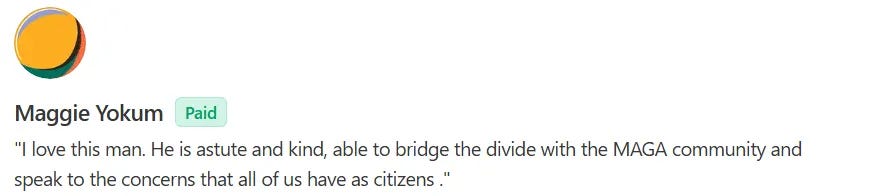
James Talarico shows why. He does not need to imitate MAGA aggression. He can speak calmly, invoke faith, respect voters, and still draw a hard moral line. The segment describes him as delivering devastating arguments “with a smile,” reaching voters through language that validates their lives rather than insulting their identities.
And the strategy has measurable potential. The August UT/Texas Politics Project poll found Talarico outperforming Ken Paxton overall on whether voters considered him honest, competent, caring, strong, and knowledgeable. Another recent poll reported by the Texas Tribune had Talarico leading Paxton 45% to 40%, including unusually strong performance among independents and voters without college degrees.
That is the lesson.
Progressives do not need to moderate away economic populism, civil rights, healthcare, or democratic accountability. They need to explain those values in language rooted in everyday life.
Dolly Parton understood that people remember who sees them. James Talarico appears to understand it politically.
Democrats should understand it before another consultant tells them to surrender the very convictions capable of winning.