


WBAI’s We Decide with Jenna Flanagan Panel: Trump’s latest chaos spans a White House dinner panic, canceled Iran talks, Lebanon violence, and GOP doubts about Hegseth. A warning for democracy.
Iran Talks Fail


Podcasts (Video — Audio)
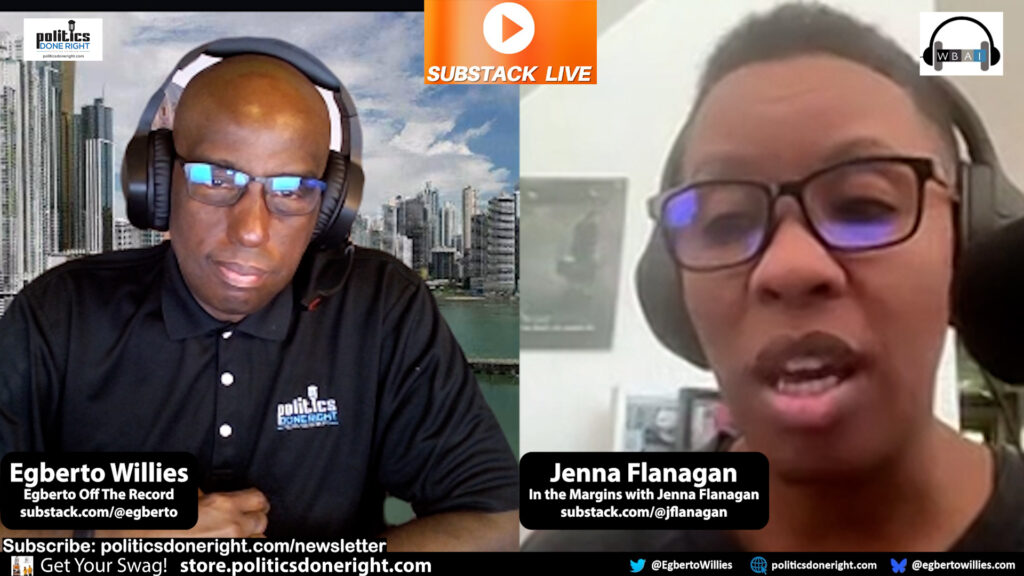
The embedded video contains solely the questions that WBAI’s We Decide’s Jenna Flanagan asked me. The entire panel discussion can be viewed here (Episode: 2026-04-27). We Decide is a joint Pacifica Affiliate, WBAI production, and the We Decide: America at the Crossroads with Jenna Flanagan.
Summary
Another week of chaos exposed what happens when spectacle replaces governance. The WBAI panel on WE DECIDE with Jenna Flanagan tackled the White House Correspondents Dinner security scare, Trump’s reckless retreat from Iran diplomacy, the fake Israel-Lebanon ceasefire, and Republican whispers that Defense Secretary Pete Hegseth should go. The common thread was simple: instability flows from leadership built on grievance, vanity, and incompetence.
- The White House Correspondents’ Dinner incident showed both America’s gun crisis and alarming security failures around elite institutions.
- Trump’s cancellation of Iran negotiations risked replacing diplomacy with escalation and regional instability.
- The Israel-Lebanon ceasefire appeared more rhetorical than real, proving that ceasefires without accountability rarely hold.
- Senate Republicans’ concerns about Hegseth suggested internal panic over Pentagon leadership.
- Political elites keep normalizing dysfunction that would shock any healthy democracy.
A functioning democracy requires competence, diplomacy, and accountability. What the panel described instead was a government addicted to drama while ordinary people pay the price.
Premium Content (Complimentary
The latest WBAI panel laid bare a painful truth: America’s political crises no longer arrive one at a time. They pile up in clusters because the governing philosophy behind them is chaos itself. When institutions reward spectacle over substance, every headline becomes another symptom of decline.
Start with the White House Correspondents’ Dinner security scare. Reports of an armed man creating panic near one of Washington’s most visible events should force a national reckoning. Too often, gun violence becomes background noise until it touches elites. Schoolchildren drill for shooters. Workers fear public spaces. Communities mourn daily losses. Yet only when danger reaches journalists, celebrities, and politicians does official Washington suddenly feel vulnerable. That double standard says everything about whose safety receives urgency.
The panel also highlighted a deeper issue: lax security and reactive governance. If major national events cannot guarantee competent screening and preparation, what does that say about broader readiness? Security theater often replaces genuine prevention. Politicians demand more force after tragedies while refusing sensible gun reforms supported by much of the public, including universal background checks and red flag laws.
Then came Trump’s abandonment of Iran negotiations. Diplomacy is rarely glamorous. It requires patience, compromise, and strategic maturity. But diplomacy saves lives. Walking away from talks with Iran risks empowering hardliners on all sides, increasing oil market volatility, threatening shipping lanes, and creating new opportunities for military confrontation. The lesson of recent decades should be clear: wars in the Middle East cost trillions, destabilize regions, and enrich contractors while ordinary families bear the burden.
According to the Costs of War Project, post-9/11 wars have cost the United States enormous sums and caused catastrophic human suffering. Yet too many leaders still treat negotiation as weakness and militarism as strength. That inversion has damaged U.S. credibility for years.
The discussion of the Israel-Lebanon ceasefire that is not really a ceasefire reveals another recurring truth: ceasefires without enforcement mechanisms become public relations tools. Civilians in border regions do not need slogans. They need verifiable de-escalation, humanitarian access, and political settlements that address root causes. Repeated cycles of bombing followed by temporary pauses only guarantee future violence.
Finally, anonymous Senate Republicans reportedly wanting Hegseth out at the Department of Defense speaks volumes. If lawmakers privately doubt the Pentagon’s leadership but publicly stay silent, they place party loyalty above national security. That pattern has become common in modern Republican politics: private alarm, public obedience.
Democracy cannot function when elected officials whisper concerns anonymously while refusing open accountability. If leaders believe someone is unfit to oversee the military, they should say so publicly and act accordingly.
The through line connecting every topic is institutional cowardice. Media figures normalize chaos because outrage drives ratings. Politicians tolerate incompetence because confrontation carries risk. Corporate interests prefer endless conflict because instability can be profitable. Meanwhile, working people face inflation, insecurity, and neglect.
A progressive response starts with different priorities. Invest in communities instead of endless war. Expand diplomacy instead of glorifying confrontation. Enact common-sense gun reforms instead of offering thoughts and prayers. Demand transparent oversight, not anonymous leaks. Treat public service as service, not performance art.
The panel captured a nation where too many insiders adapt to dysfunction. But ordinary people do not have to accept that adaptation. They can demand governance that values peace over posturing, safety over slogans, and truth over spectacle. That is how democracies recover.