


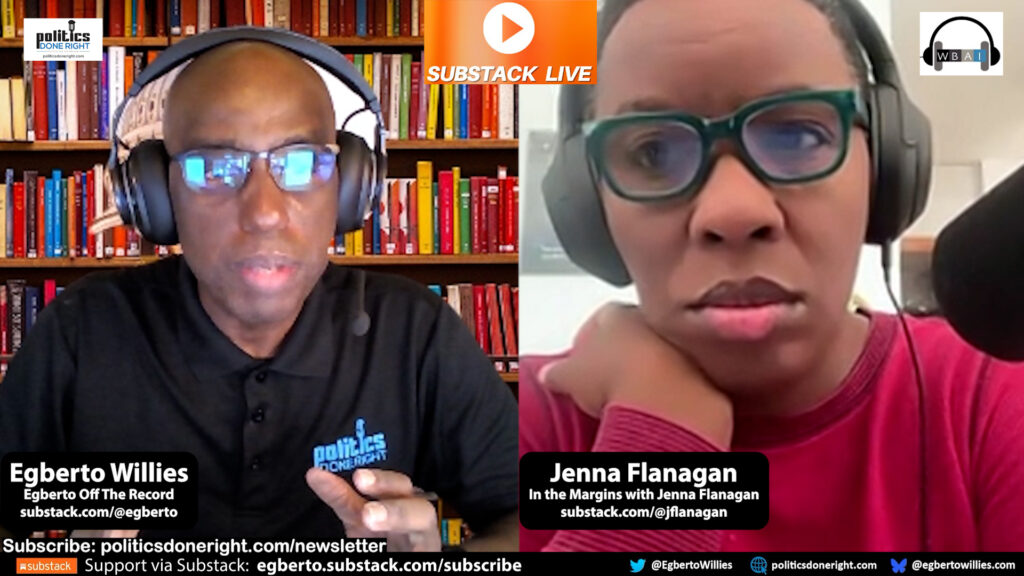
WBAI’s We Decide with Jenna Flanagan Panel: The Iran war, Cuba oil decision, and #NoKings protests reveal how power, economics, and resistance collide in today’s political landscape.
Iran War Truth


Podcasts (Video — Audio)
The embedded video contains solely the questions that WBAI’s We Decide’s Jenna Flanagan asked me. The entire panel discussion can be viewed here (Episode: 2026-03-30). We Decide is a joint Pacifica Affiliate, WBAI production, and the We Decide: America at the Crossroads with Jenna Flanagan.
Summary
The conversation cuts through the noise: war, sanctions, and resistance are not random events—they are choices driven by power, economics, and control. The Iran conflict exposes a dangerous mix of geopolitical ambition and oil economics, while Cuba policy reveals coercion masked as diplomacy. Meanwhile, the #NoKings movement shows that ordinary people are no longer willing to accept a system rigged for elites.
- The war with Iran reflects oil price manipulation and imperial ambition rather than clear national security needs
- Leadership pursues regime change fantasies while underestimating Iran’s scale, resilience, and historical depth
- Allowing Russian oil into Cuba is not a policy shift but a calculated display of control over suffering
- U.S. sanctions isolate Cuba by intimidating allied nations, exacerbating humanitarian conditions
- The #NoKings protests represent a grassroots awakening—people reclaiming political agency and rejecting plutocracy
The pattern is unmistakable: power operates through economic manipulation, military force, and narrative control. Yet the public is responding. When millions mobilize, they challenge the very foundation of elite dominance and redefine what democracy should look like.
Premium Content (Complimentary)
The discussion lays bare a truth that mainstream discourse often obscures: war, sanctions, and protest are not isolated phenomena. They form a continuum of power—how it is exercised, justified, and resisted. The Iran conflict, the Cuban oil decision, and the #NoKings movement each expose a different dimension of that power structure.
Start with Iran. The justification for war remains vague because the real motivation rarely gets stated outright. The analysis points to oil—not merely as a resource, but as a lever. Oil prices shape domestic economies, especially in states like Texas, where production requires a certain price threshold to remain profitable. When oil dips too low, the political incentive emerges to create instability that drives prices upward. And geopolitical tensions directly affect global energy markets.
But economic incentives alone do not explain the full picture. There is also the enduring obsession with regime change. Iran represents unfinished business for generations of U.S. leadership. From the 1953 coup to the post-1979 hostility, the idea of reshaping Iran persists as a symbolic victory—a legacy project. Yet this ambition ignores reality. Iran is not a fragile state. It is a large, historically grounded society with strategic depth. Military experts consistently warn that such conflicts escalate unpredictably and rarely achieve stated goals.
The rhetoric that simplifies adversaries into caricatures proves dangerous. It leads to underestimation, miscalculation, and prolonged conflict. When leadership begins to believe its own propaganda, it creates conditions for failure. That pattern has repeated from Iraq to Afghanistan—and now threatens to repeat again.
Shift to Cuba, and the same logic of power appears in a different form. The decision to allow Russian oil into Cuba does not signal compassion or policy reform. It signals control. Sanctions have long functioned as tools of coercion, limiting access to essential goods and punishing populations for political ends. Such sanctions disproportionately harm civilians while failing to achieve meaningful political change.
The striking element here is not the exception—the allowance of one shipment—but the broader system that made it necessary. Neighboring countries could supply Cuba, yet they hesitate. Why? Because U.S. pressure extends beyond its borders. It shapes the behavior of other nations through fear of economic retaliation. That transforms foreign policy into a mechanism of global discipline.
The message becomes clear: access to survival is conditional. It depends on compliance with U.S. interests. That is not diplomacy. That is leverage and coercion.
Against this backdrop, the #NoKings movement emerges as a counterforce. Unlike the top-down exercise of power seen in war and sanctions, this movement operates from the ground up. It rejects the premise that authority flows from elites and instead asserts that power originates with the people.
The protests reflect a broader awakening. Across the country, individuals are recognizing that disengagement allows systems of exploitation to persist. Civic participation becomes not just a right, but a necessity. The public trust in institutions has declined sharply, yet civic activism has increased—a sign that people are seeking new ways to influence change.
The movement’s strength lies in its diversity of purpose. In one region, it may focus on voting rights; in another, economic justice; in another, systemic inequality. What unites these efforts is a shared understanding: democracy requires active participation. It cannot survive as a passive exercise.
Independent media plays a crucial role here. It amplifies voices that corporate outlets often ignore or marginalize. It creates space for narratives that challenge dominant frameworks. And it helps transform individual frustration into collective action.
Taken together, these three topics reveal a consistent theme. Power concentrates at the top through economic and military means, but it faces growing resistance from below. The Iran war exposes the dangers of unchecked ambition. The Cuba policy reveals the cruelty of economic coercion. The #NoKings movement demonstrates the potential of collective action.
The future depends on which force prevails.